System design
Begin with one working service. Follow its requests, data, and failure paths before introducing more components.
Connect design decisions to a concrete service. Begin with requirements and request flow before adding more components.
2 available · 10 planned
Your learning path
Start with the linked lessons. The remaining topics are planned.
Start with requirements
Turn a short-link service brief into concrete behavior, quality targets, and acceptance scenarios.
AvailableTrace the request flow
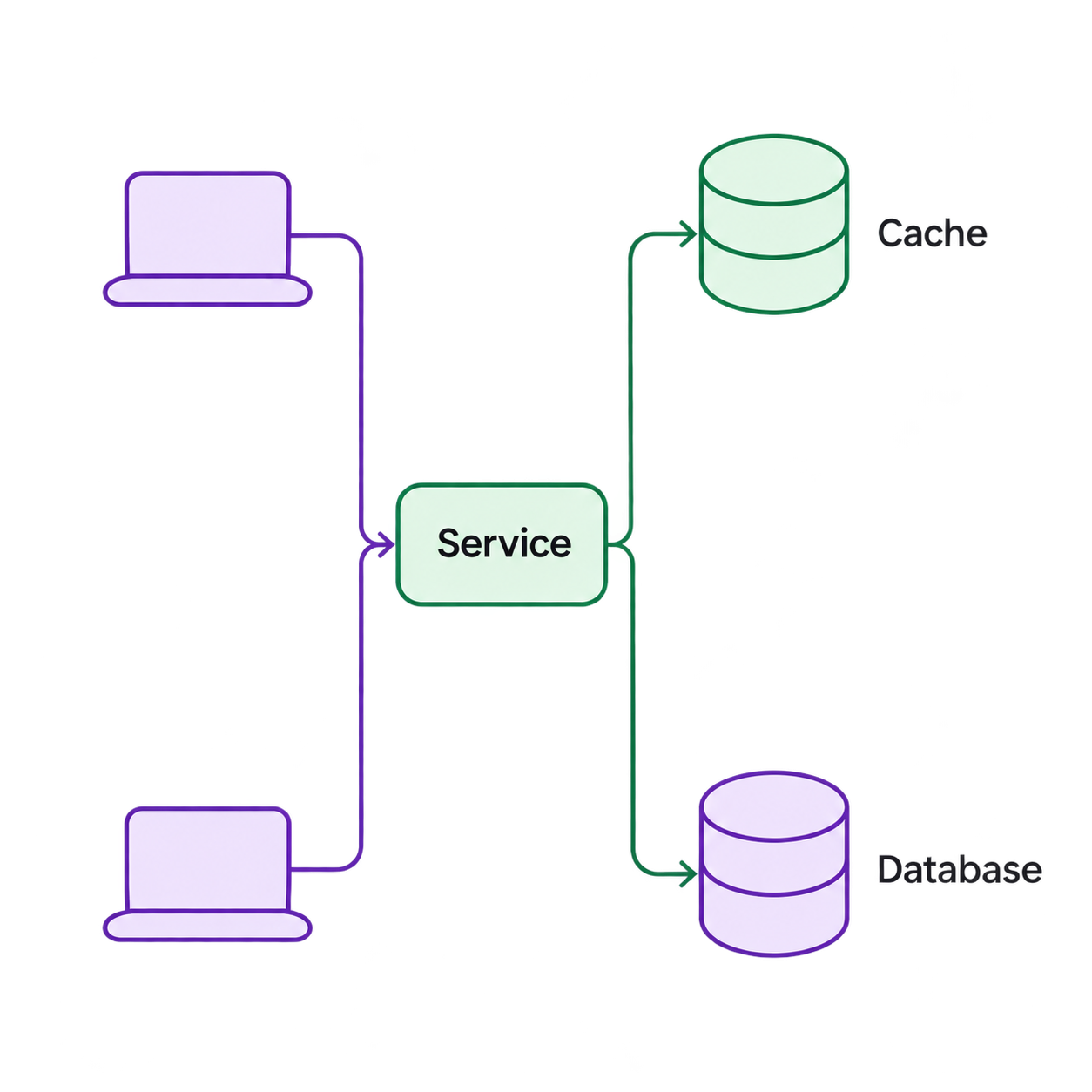
Follow a redirect from client to cache and database, including expiry checks and dependency failures.
AvailableMeasure before scaling
Use latency, throughput, and resource use to find the constraint.
PlannedDefine the API contract
Choose operations, responses, and useful error behavior.
PlannedChoose data models and indexes
Let the access patterns shape storage decisions.
PlannedSeparate cache retention from link validity
Give cached data and business rules their own lifetimes.
PlannedHandle concurrency
Reason about shared state and requests that overlap.
PlannedRun multiple application instances
Identify what must be shared when one process becomes several.
PlannedMove work off the request path
Use asynchronous work when the response can finish first.
PlannedUnderstand replication
Consider copies, read behavior, and the cost of stale data.
PlannedDesign for failures
Set timeouts and decide what users see when a dependency fails.
PlannedPut the service design together
Explain the complete system and its remaining trade-offs.
Planned
A case study you can read now
Explore cache retention and link validity through a Go URL shortener.
Cache Expiry vs Link Expiry: Getting a Go URL Shortener Right